HOA Water Conservation Standards in San Diego: Transitioning to Chic Xeriscape
HOA rules and water conservation can feel at odds — they are not. Here is how to go water-wise while staying compliant, and even setting the neighborhood standard.
For homeowners in San Diego’s master-planned communities, two pressures collide: HOA landscape standards that demand a tidy, attractive yard, and water rules (plus rising bills) that make a thirsty lawn increasingly hard to justify. The good news is that these goals align better than most people think — with the right design.
California law is on your side
State law limits an HOA’s ability to prohibit low-water and drought-tolerant landscaping, and restricts enforcing green-lawn mandates during declared drought conditions. HOAs can still enforce reasonable design and maintenance standards — they just cannot force you to waste water. The path forward is a design that satisfies both.
What HOAs actually want to see
- A designed, intentional look — not bare dirt or a gravel lot.
- Neat edges, defined beds, and healthy, maintained plants.
- Cohesion with the community’s overall aesthetic.
- Often, a submitted plan for architectural review before you start.
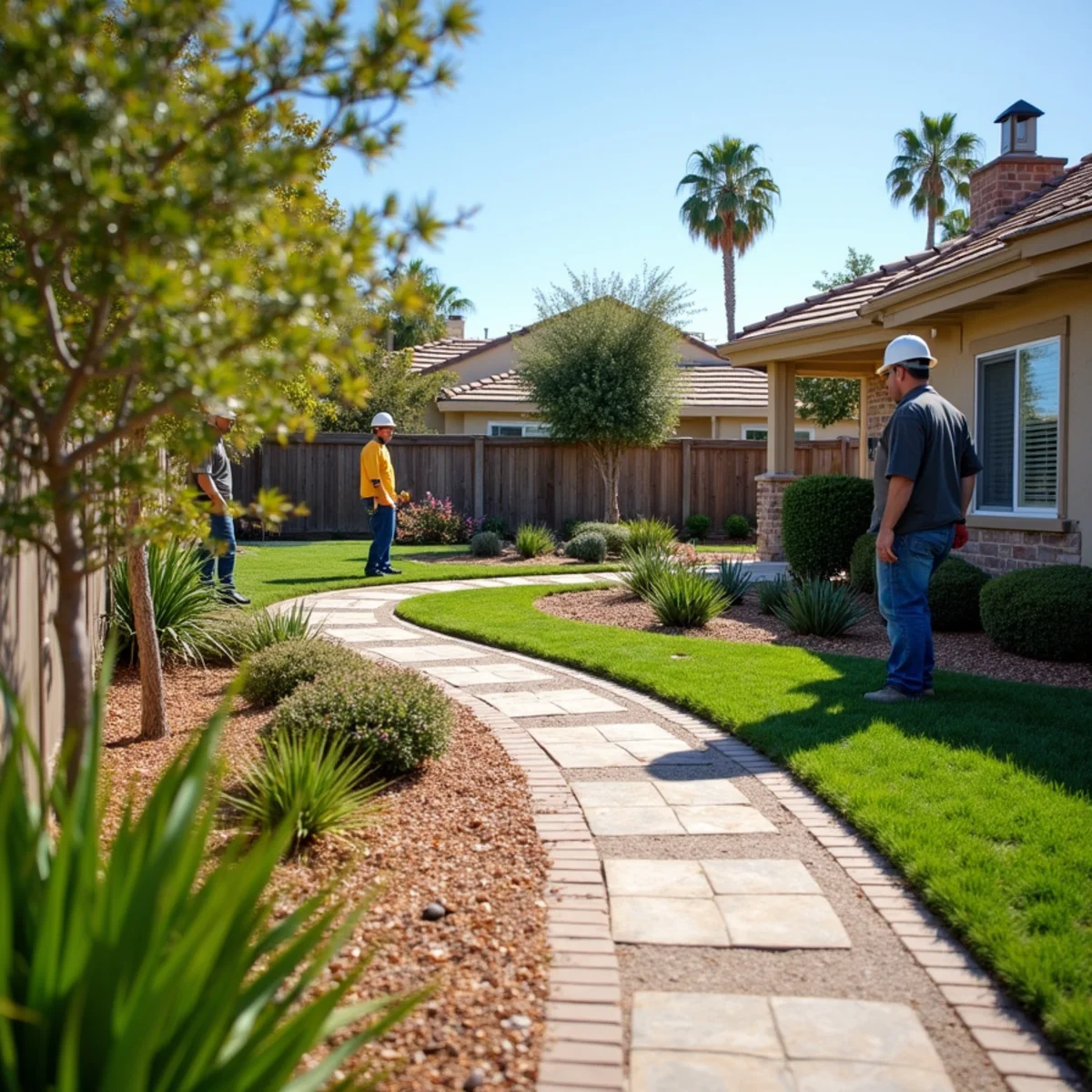
A well-designed drought-tolerant landscape delivers all of that — layered succulents, natives, and grasses with clean edges and mulched beds read as an upgrade, not a compromise. See converting lawns to xeriscape for how the conversion works.
Turf is often the easiest HOA yes
For communities that want the look of a green lawn, artificial turf is frequently the smoothest approval — it stays uniformly green year-round, needs no water, and reads as a maintained lawn. We install it to a standard that passes review.
Get the plan approved the first time
The friction is almost always in the submittal, not the plants. We design to community guidelines and provide the plan documentation architectural committees ask for, so you get approved without a back-and-forth. For boards and managers overseeing common areas, this ties directly into commercial grounds maintenance and water-audit strategy.
We convert HOA-governed yards across Chula Vista and San Marcos every season. Call (323) 606-0255 to plan a compliant, water-wise yard.
Getting your water-wise plan approved the first time
The friction in an HOA conversion is almost never the plants — it is the submittal. Architectural committees want to see a designed, intentional plan that fits the community aesthetic, with neat edges, defined beds, and healthy planting, not bare dirt or a gravel lot. Provide that, plus the documentation they ask for, and approval is usually straightforward. Skip it and you invite a back-and-forth that stalls the project.
California law is on your side here: it limits an HOA’s ability to prohibit low-water landscaping or enforce green-lawn mandates during declared drought. HOAs can still enforce reasonable design and maintenance standards — which a well-designed drought-tolerant landscape easily meets. For communities that want the look of a lawn, artificial turf is often the smoothest approval of all.
For boards and managers overseeing common areas, this ties into water-audit strategy through commercial grounds maintenance.
What committees want in a submittal
- A designed, intentional plan — not bare gravel or dirt.
- Neat edges, defined beds, and a cohesive plant palette.
- Consistency with the community’s overall aesthetic.
- Plant density and mulch that also satisfy rebate requirements.
- The plan documentation your architectural review process requires.
Designing a xeriscape that reads as an upgrade
The reason some water-wise yards get approved instantly and others get rejected is rarely the plant list — it is the design. A committee sees “bare gravel and a few cacti” as a downgrade and “layered, intentional, maintained” as an upgrade, even when both use the same amount of water. The tricks that make the difference are straightforward: define beds with clean edges, layer plants by height for depth, repeat a few species for cohesion rather than a chaotic mix, and use quality mulch and a couple of specimen plants or boulders as focal points.
Done that way, a drought-tolerant landscape reads as a designed front yard, not a compromise — which is exactly what satisfies both the architectural committee and the rebate program. For the look of a lawn, artificial turf is often the easiest approval of all.
- Define beds with clean, crisp edges.
- Layer plants by height for depth and structure.
- Repeat a few species for cohesion, not a chaotic mix.
- Use quality mulch and a few specimen plants or boulders as focal points.
- Keep it maintained — tidy is what reads as an upgrade.
We design HOA-compliant conversions across Chula Vista and San Marcos.
Frequently Asked Questions
Can my HOA make me keep a grass lawn in San Diego?
What makes a water-wise yard HOA-approvable?
Is artificial turf usually allowed by HOAs?
Can my HOA reject a drought-tolerant landscape?
Do you handle the HOA submittal paperwork?
What if my HOA still denies a compliant water-wise plan?
Need help with this in Southern California?
SOCAL EXTERIOR SERVICES, INC is a licensed San Diego landscaping and hardscaping contractor. Get a free, honest estimate from a local team that does the work right.