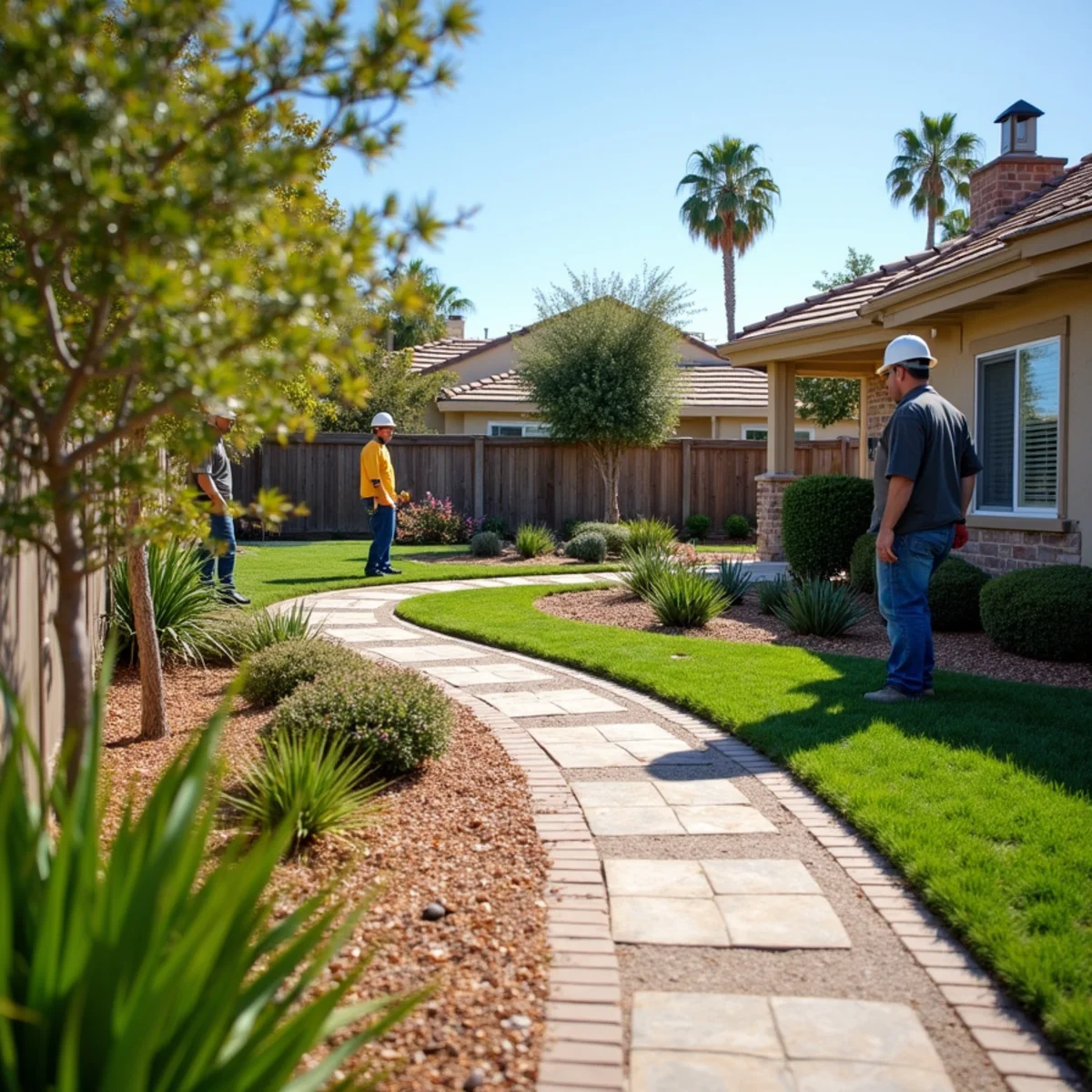
Slip-and-Fall Prevention on Commercial Concrete & Paver Walkways in Southern California
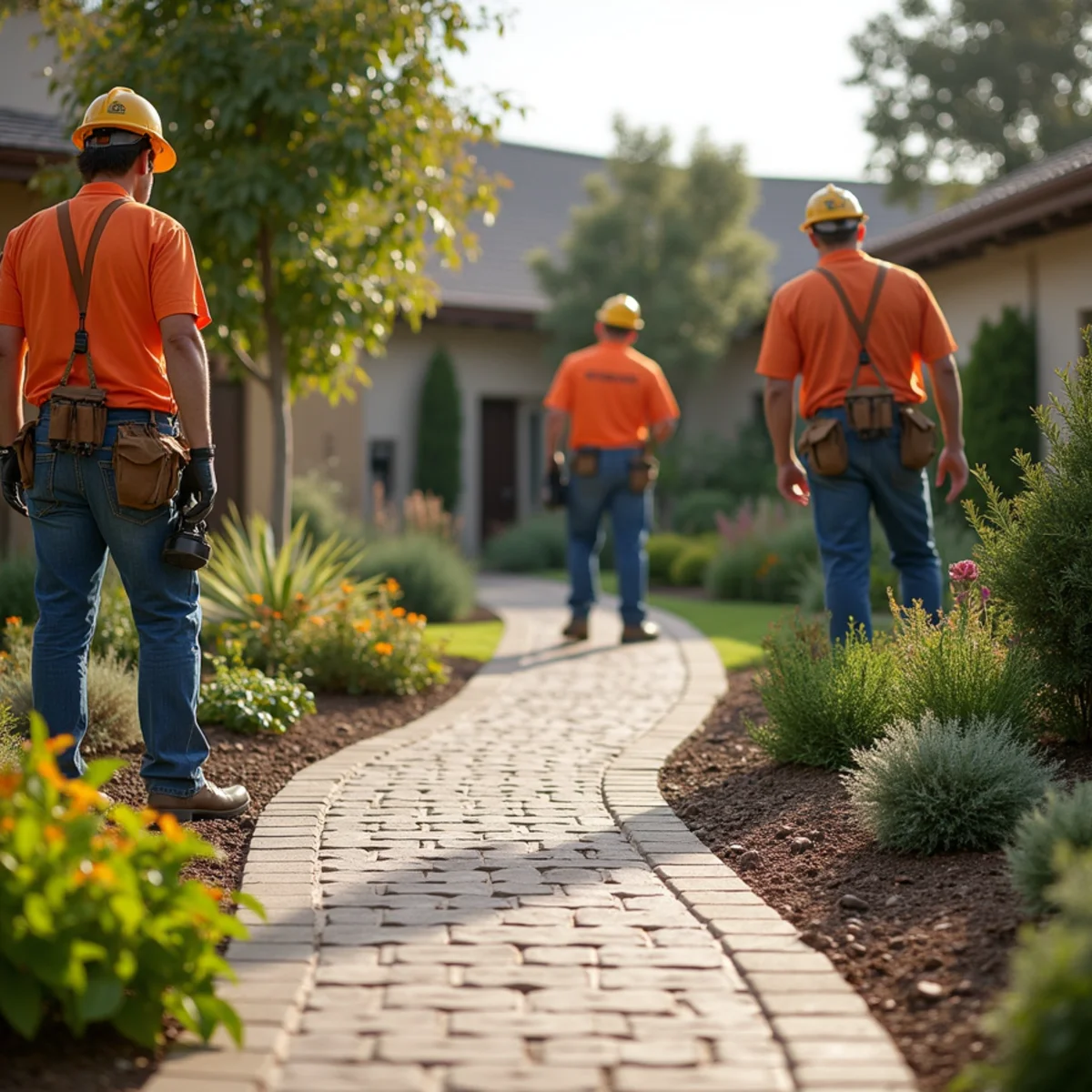
On a commercial property, an uneven walkway is a lawsuit waiting to happen. Here is how to reduce slip-and-fall risk on concrete and paver surfaces.
For a commercial property owner or manager, walkways are a quiet but serious liability. A single trip hazard or slick surface can turn into a claim that dwarfs the cost of prevention. The good news is that most slip-and-fall risk on hardscape is preventable with attention to a handful of factors.
Level surfaces are the first defense
The most common trip hazard is a height difference — a lifted paver, a settled section, a cracked and heaved slab. In our expansive clay, poorly based hardscape settles unevenly and creates exactly these lips. Because pavers are modular, a settled section can be lifted and reset level, unlike a cracked slab that must be replaced. Proper base construction, covered on our paver patios and driveways page and in why paver driveways sink, prevents it in the first place.
Traction and sealing
- Choose textured or tumbled pavers for walkways rather than smooth, polished surfaces.
- Seal pavers with a product appropriate to foot traffic — the wrong high-gloss sealer can reduce traction.
- Keep surfaces clean; algae and organic film get slick when damp, especially in shaded areas.
- Address low spots where water ponds and creates slick, hazardous patches.
Lighting, edges, and transitions
Many falls happen at transitions — a step, a ramp, a curb, a change in surface — especially where lighting is poor. Clear sightlines, well-lit paths, marked level changes, and trimmed vegetation that does not obscure the walkway all reduce risk. Keeping that vegetation and lighting clear is part of ongoing commercial grounds maintenance.
Document your maintenance
A consistent, documented maintenance program is both prevention and legal protection. Regular inspections that catch and fix hazards early — and a paper trail showing you did — are exactly what protects you if an incident occurs, a theme we raise in commercial storm damage protocols.
We build, repair, and maintain safe commercial walkways across San Diego and Anaheim. To reduce your walkway liability, call (323) 606-0255.
Turning walkway maintenance into liability protection
On a commercial property, walkway maintenance is risk management, and documentation is what makes it defensible. A consistent inspection-and-repair program that catches lifted pavers, ponding, and slick spots early does two things: it prevents the incident, and it creates the paper trail that demonstrates due diligence if a claim ever arises. The properties that get sued successfully are usually the ones with an obvious, unaddressed hazard and no record of upkeep.
The physical fixes are straightforward. Because pavers are modular, a settled or lifted section can be reset level rather than demolished like a cracked slab — the same advantage explained in why paver driveways sink. Proper base construction from our paver and hardscape work prevents the trip-lip in the first place, and keeping vegetation and lighting clear is part of ongoing commercial grounds maintenance.
After a storm, prompt debris clearing keeps walkways safe too, as covered in commercial storm damage protocols.
A walkway safety checklist
- Reset lifted or settled pavers to eliminate height-difference trip hazards.
- Choose textured pavers and traffic-appropriate sealers — avoid high-gloss on walkways.
- Keep surfaces clean of algae and organic film, especially in shade.
- Correct low spots where water ponds and turns slick.
- Light transitions — steps, ramps, curbs — and keep vegetation clear of the path.
Seasonal walkway hazards in Southern California
Walkway risk is not constant through the year, and a smart maintenance program tracks the seasons. In the cool, damp months, shaded sections grow algae and organic film that turn slick when wet — one of the most common and most overlooked causes of falls. Winter storms drop leaves, fronds, and debris that both hide trip hazards and become slippery underfoot. And after a long, hot summer, an over-glossy or sun-degraded sealer can leave a surface with too little traction just as foot traffic picks up for the holidays.
Building these seasonal checks into a documented commercial grounds program — clearing algae before winter, debris after storms, and re-evaluating sealers — is both prevention and the paper trail that protects you. It ties directly into commercial storm protocols.
- Damp/cool months: clear algae and organic film from shaded walkways.
- Winter: remove storm debris that hides trip hazards and gets slick.
- Post-summer: re-check sealers for gloss and traction before peak traffic.
- Year-round: reset lifted or settled pavers promptly.
- Always: document inspections and repairs for liability protection.
We build, repair, and maintain safe commercial walkways across San Diego and Anaheim.
Frequently Asked Questions
What causes most slip-and-falls on commercial walkways?
Does sealing pavers make them more slippery?
How does documented maintenance help with liability?
How often should commercial walkways be inspected?
Are pavers safer than concrete for commercial walkways?
What ADA and accessibility factors affect commercial walkways?
Need help with this in Southern California?
SOCAL EXTERIOR SERVICES, INC is a licensed San Diego landscaping and hardscaping contractor. Get a free, honest estimate from a local team that does the work right.