Commercial Storm Damage Protocols: Clearing Palm Fronds & Hazards From Retail Centers
For property managers, a storm is a liability clock. Here is a clean protocol for getting retail centers and business parks safe and open again fast.
When a windstorm hits a retail center or business park, every hour of blocked access and every hanging limb is both lost revenue and liability exposure. A clear protocol — decided before the storm — is what separates a fast, defensible response from a scramble.
Set the protocol before storm season
- Identify a 24/7 landscaping contractor and put the number in your emergency binder.
- Map the site’s high-risk trees — tall palms, mature eucalyptus, anything over parking or walkways.
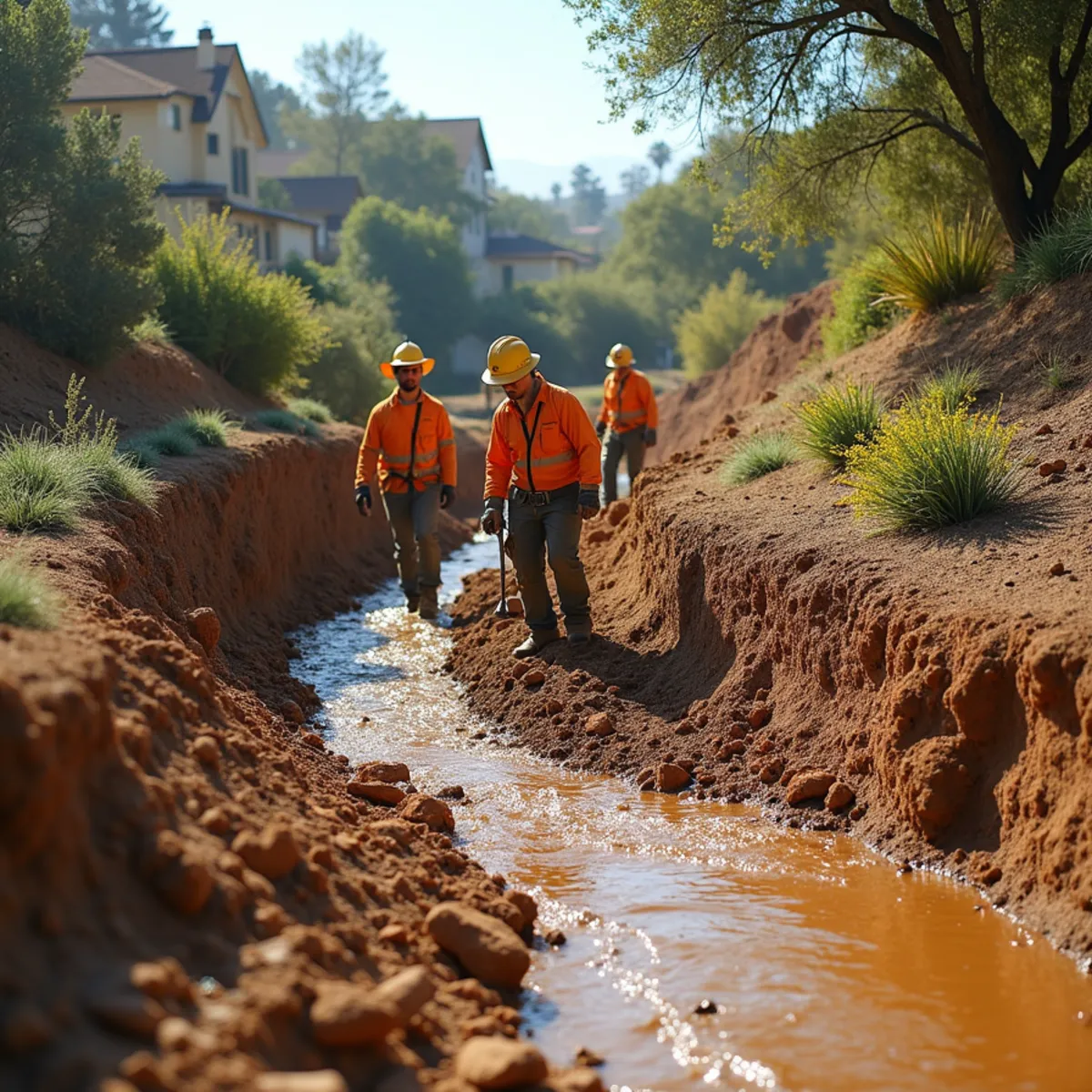
- Know where your drains and catch basins are so flooding can be addressed fast.
- Pre-authorize emergency spend up to a threshold so crews can act without waiting on approvals.
The first response: triage hazards
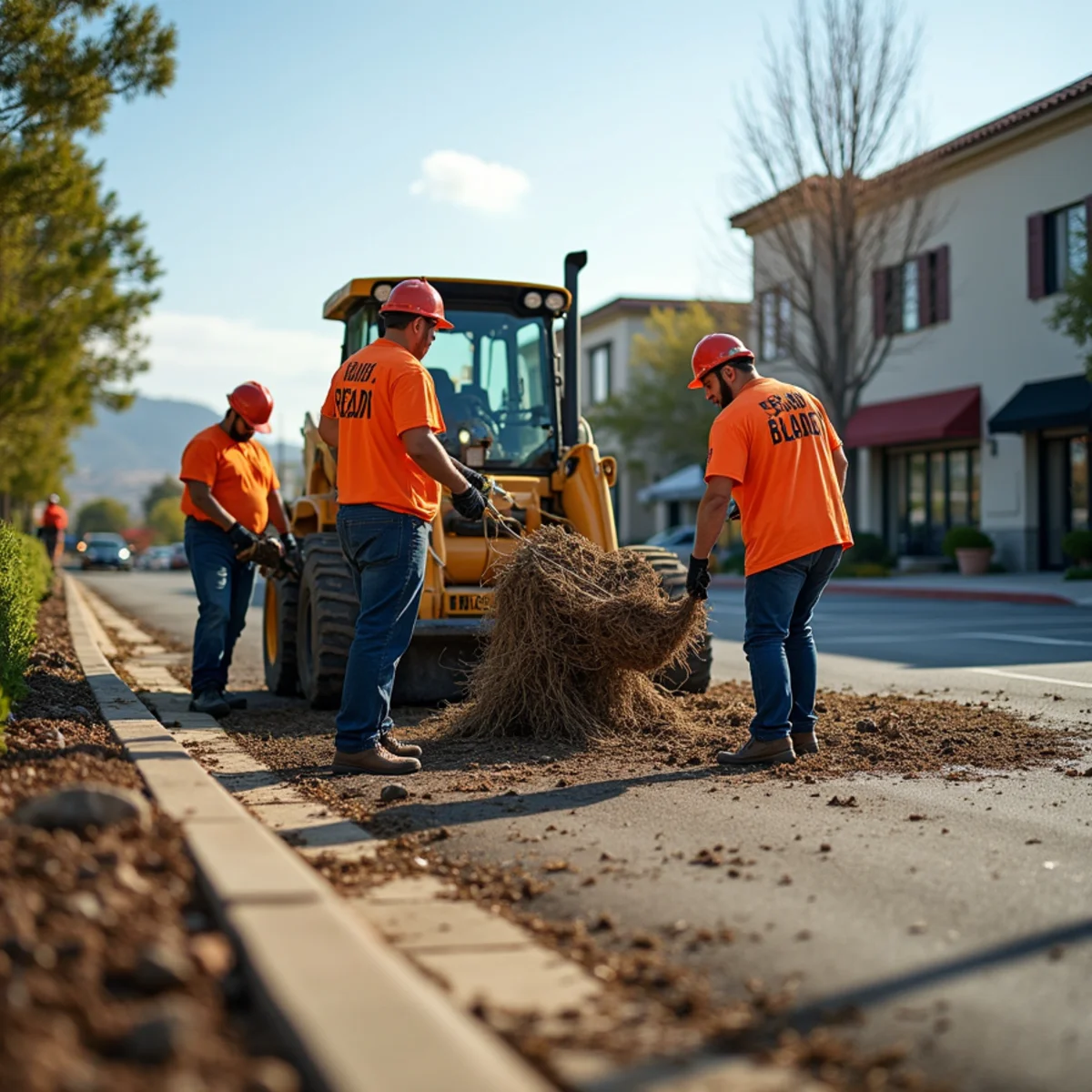
On arrival, hazards get handled in order of risk to people: hanging limbs over walkways, downed debris blocking fire lanes and exits, and open or leaning fences. Our storm and high-wind cleanup crews secure the dangerous conditions first, then move to full debris clearing so tenants and customers have safe access.
Palm fronds are a commercial-specific hazard
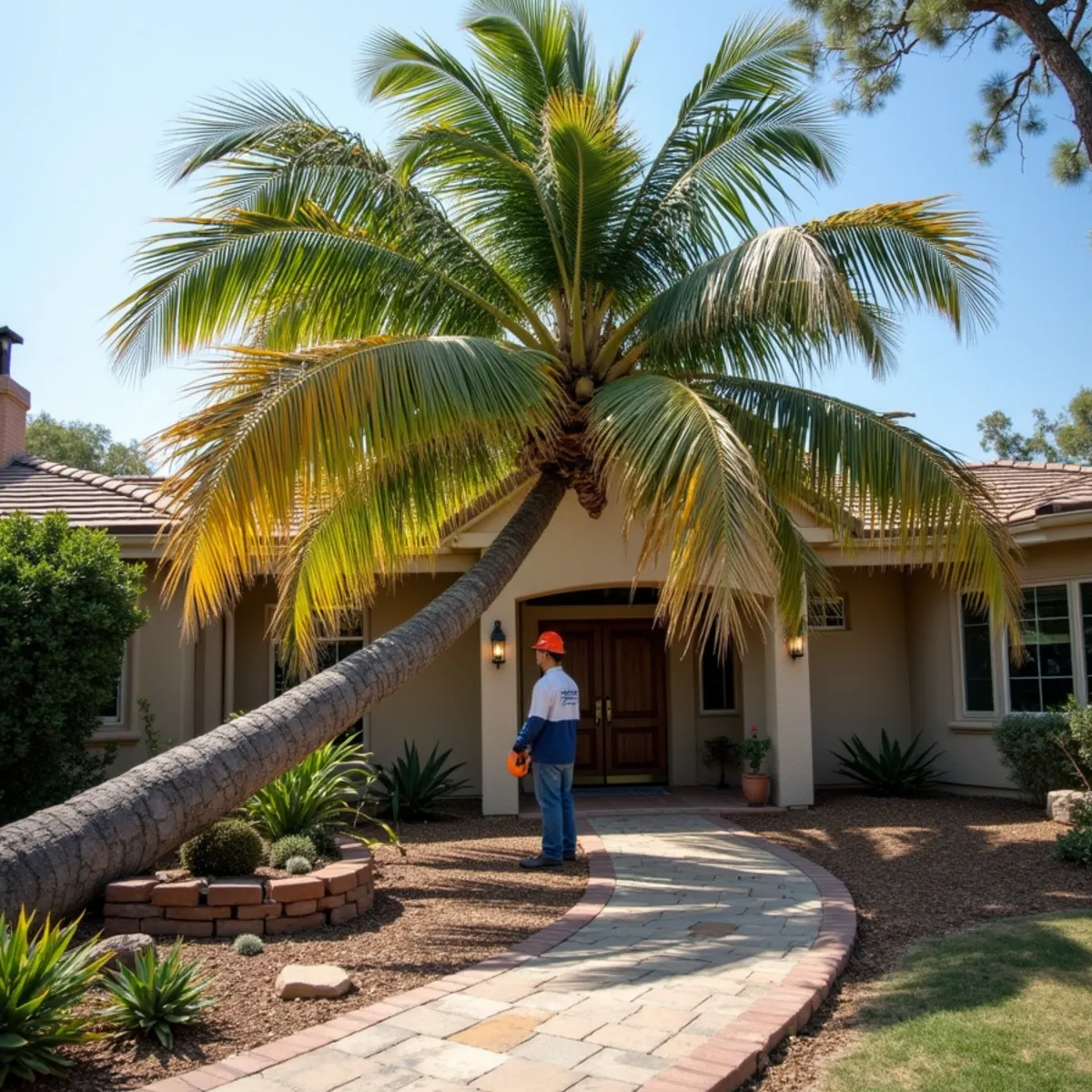
Tall Mexican fan palms ring countless San Diego shopping centers, and their heavy fronds become projectiles and trip hazards in wind. Clearing them fast — and trimming skirts proactively before the season — is core to commercial storm readiness. When a palm itself fails, our emergency tree removal team handles the heavy lift.
Document for liability and insurance
Photograph conditions on arrival and after clearing, log the timeline, and keep the work order. That record protects you if a slip-and-fall or property claim follows — a theme we expand on in slip-and-fall prevention on commercial paver walkways.
From storm response to standing contract
Managers who rely on us for storms usually fold it into ongoing commercial grounds maintenance, so the same crew that knows the property is already on call. We serve centers across San Diego and Oceanside and throughout the county. Program (323) 606-0255 into your emergency plan today.
Building a storm-response plan before the season
The property managers who come through a storm cleanly are the ones who decided everything in advance. Who to call, what to pre-authorize, where the drains are, and which trees are the biggest risk — settling those before a red-flag warning turns a scramble into a checklist. A licensed contractor who already maintains the site through commercial grounds maintenance is the fastest path, because the crew already knows the property.
The single most valuable pre-season step is a tree risk survey. Tall palms and mature eucalyptus over parking, walkways, and storefronts are the failures that close a center and create liability. Trimming skirts and thinning canopies before fall — and flagging trees for emergency removal — prevents most of it.
Documentation protects you on the back end. Photos of arrival conditions, a logged timeline, and completed work orders defend against slip-and-fall and property claims, a theme we expand in slip-and-fall prevention on commercial paver walkways.
What belongs in your emergency binder
- A 24/7 landscaping contractor’s direct number: (323) 606-0255.
- A site map marking high-risk trees, drains, and fire lanes.
- Pre-authorized emergency spend up to a set threshold.
- Tenant notification and access procedures.
- A post-event documentation and reporting template.
The post-storm reopening walkthrough
Clearing debris is only half of getting a commercial property back to normal. Before tenants and customers return, a manager needs to confirm the site is not just clear but safe — which is a different, more deliberate pass. The walkthrough looks for the hazards that linger after the obvious debris is gone: partially cracked limbs still overhead, lifted or shifted pavers that became trip hazards, standing water over drains, and lighting knocked out along walkways.
This is also the moment to capture the documentation that protects you. Photograph the cleared condition, note anything deferred for follow-up repair, and log the timeline. Deferred items — a leaning tree flagged for removal, a fence section for repair, a settled walkway to reset — should be scheduled, not forgotten, because they are tomorrow’s liability claim.
- Scan overhead for cracked or hanging limbs not yet down.
- Check walkways and lots for lifted pavers and new trip hazards.
- Confirm drains are clear and no standing water remains.
- Verify pathway and parking lighting is functional.
- Photograph the cleared site and log deferred repairs.
We keep centers safe and open across San Diego and Oceanside and throughout the county.
Frequently Asked Questions
Can you respond to a commercial property 24/7?
Do you provide documentation for our records?
Can storm response roll into a maintenance contract?
How fast can you respond to a commercial storm emergency?
Can you handle both the cleanup and the follow-up repairs?
What should tenants and staff do during a storm event?
Need help with this in Southern California?
SOCAL EXTERIOR SERVICES, INC is a licensed San Diego landscaping and hardscaping contractor. Get a free, honest estimate from a local team that does the work right.