What to Do Immediately When a Santa Ana Windstorm Drops a Palm or Tree on Your Property
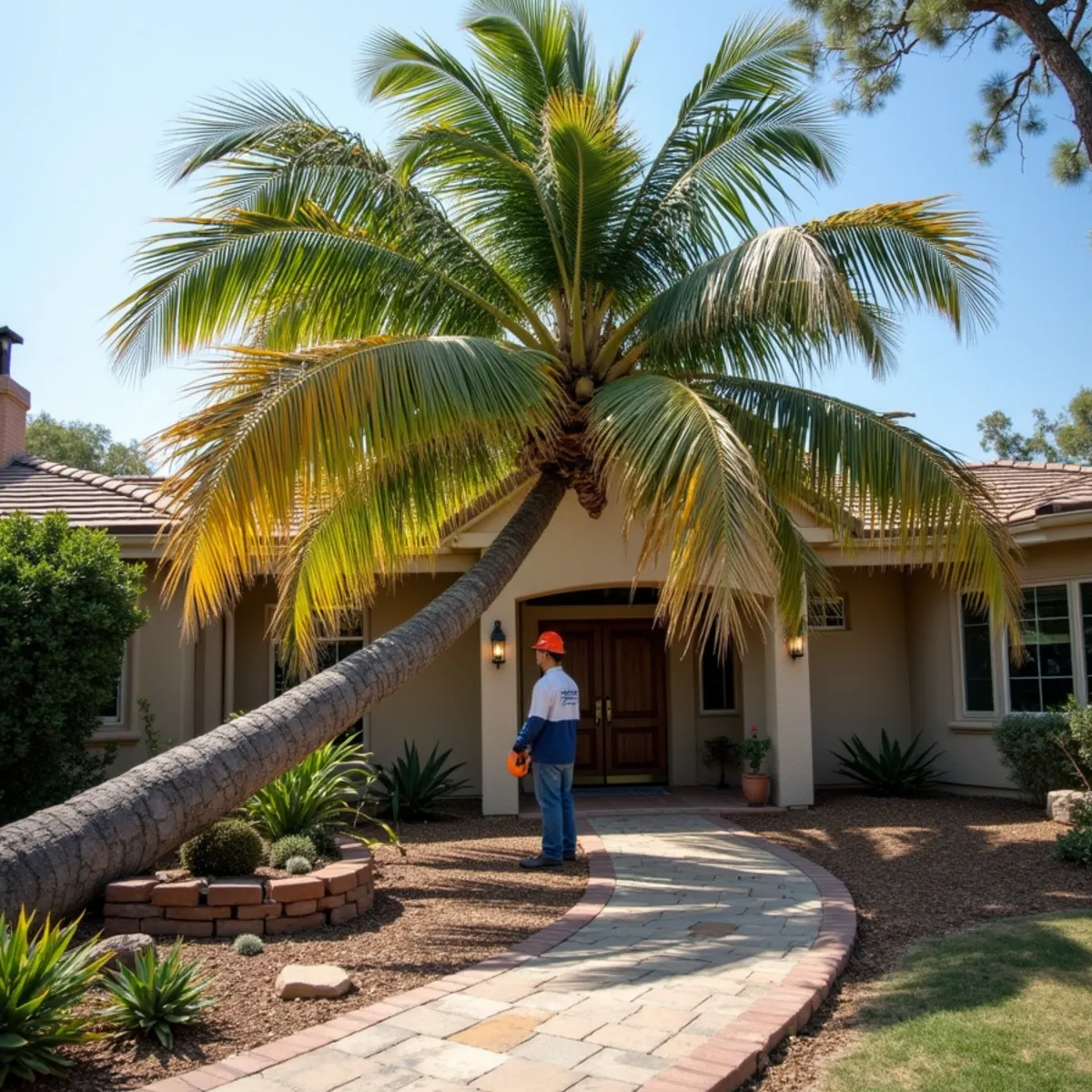
Santa Ana winds can drop a mature palm or eucalyptus in seconds. Here is exactly what to do — and not do — in the first hour to stay safe and limit the damage.
Santa Ana season turns calm San Diego afternoons into 50-plus mph gusts, and our tall Mexican fan palms and mature eucalyptus are exactly the trees that come down when it hits. If one has landed on your roof, fence, car, or across the yard, the first hour matters. Here is how to handle it safely.
First, treat every downed tree as a live hazard
A tree that has already fallen is not finished moving. Trunks under tension can shift, and limbs left hanging can drop without warning. Keep everyone — especially kids and pets — well clear of the tree and anything it is resting on.
- Assume any line touching or near the tree is a live power line and stay far away — call 911 and your utility if lines are involved.
- Do not walk under hanging or partially broken limbs; they are the most dangerous part of the scene.
- Keep off a roof a tree is resting on — the load may be holding the structure in place.
What to do in the first hour
- Get people and vehicles away from the tree and the load path if it can move.
- Document everything with photos and video from a safe distance — you will want this for insurance.
- If it is safe, place cones or a note to warn others about a tree blocking a driveway or sidewalk.
- Call a licensed crew for emergency removal — do not start cutting yourself.
Why you should not cut it yourself
A fallen or leaning tree holds load in directions you cannot see, and a single wrong cut can release that energy toward you or the house. Palms are deceptively heavy — a mature trunk can weigh thousands of pounds of dense, water-laden fiber. This is precisely the situation for an equipped crew. Our emergency fallen palm and tree removal team assesses lean and load before making a cut and works in controlled sections.
What happens after the tree is down and removed
Once the hazard is gone, the follow-up work begins: clearing and hauling debris, grinding the stump, and repairing whatever the tree took with it. Wind that drops a tree usually leaves broader damage too, which is why our storm and high-wind cleanup and fence repair crews often handle the whole aftermath as one job instead of three separate calls.
Homeowners across San Diego and El Cajon call us during and after every windstorm season. Save our number now so you are not searching for it in the wind: (323) 606-0255.
Prevent the next one
Many wind failures are predictable. Over-tall palms with heavy frond skirts, eucalyptus with included bark and dead limbs, and trees that have never been structurally pruned are the usual casualties. A pre-season inspection and cleanup dramatically lowers your risk — see our guide on inspecting mature eucalyptus and palm trees.
Which San Diego trees fail most in Santa Ana winds
After years of storm calls across the county, the casualties are predictable. Tall Mexican fan palms shed heavy fronds and, when the crown fails, drop whole trunks. Mature eucalyptus — fast-grown, brittle, and often carrying dead limbs — split at weak, included-bark unions. Aleppo and Canary Island pines catch wind like sails, and any tree with recent root heaving is a candidate to go over.
The pattern matters because it tells you what to watch before the season. A tree that leaned a little more after the last storm, lifted soil at its base, or dropped a surprising limb on a calm day is warning you. Those are the ones we remove proactively so they don’t become a 2 a.m. emergency — see our guide to inspecting mature eucalyptus and palm trees.
If a tree is already down, the aftermath is rarely just the tree. Wind that drops a eucalyptus usually takes a fence section and scatters debris across the yard, which is why our storm and high-wind cleanup and fence repair crews handle the whole scene, not just the trunk.
A simple pre-season checklist
- Have tall palms de-skirted and dead fronds removed before fall.
- Thin dense eucalyptus and pine canopies to let wind pass through.
- Remove clearly dead limbs over the house, driveway, and play areas.
- Look for new leans, cracks at limb unions, and heaving soil at the base.
- Save a 24/7 number now: (323) 606-0255.
Costly mistakes homeowners make after a tree comes down
In the rush to clean up, people make the same avoidable errors — and they usually cost more than the tree did. The biggest is treating a partially fallen or leaning tree as safe because it “stopped moving.” Trunks under tension and cracked limbs release energy unpredictably, and every year homeowners are hurt finishing what the wind started. The second is moving or cutting everything before documenting it, which weakens an insurance claim that might otherwise have paid.
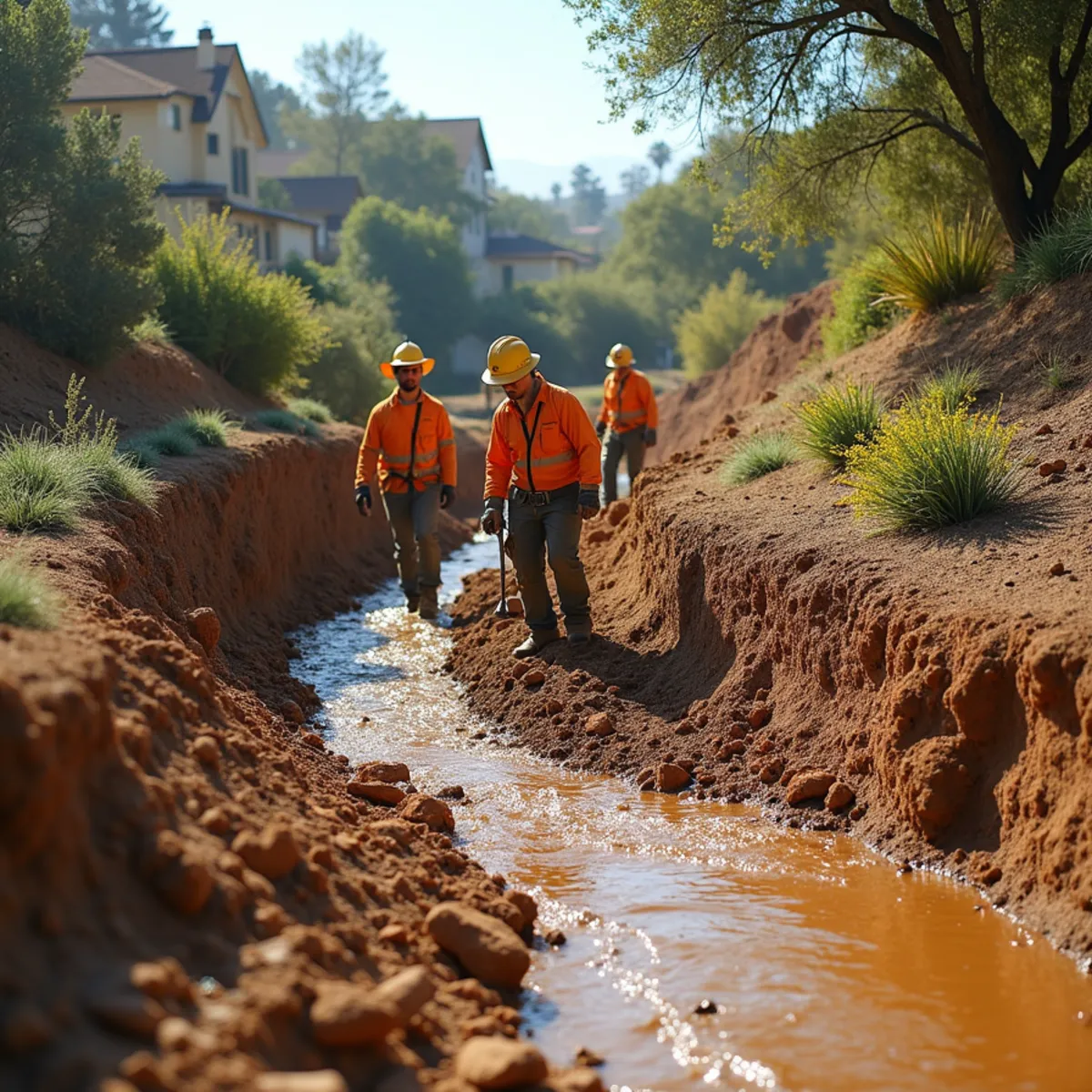
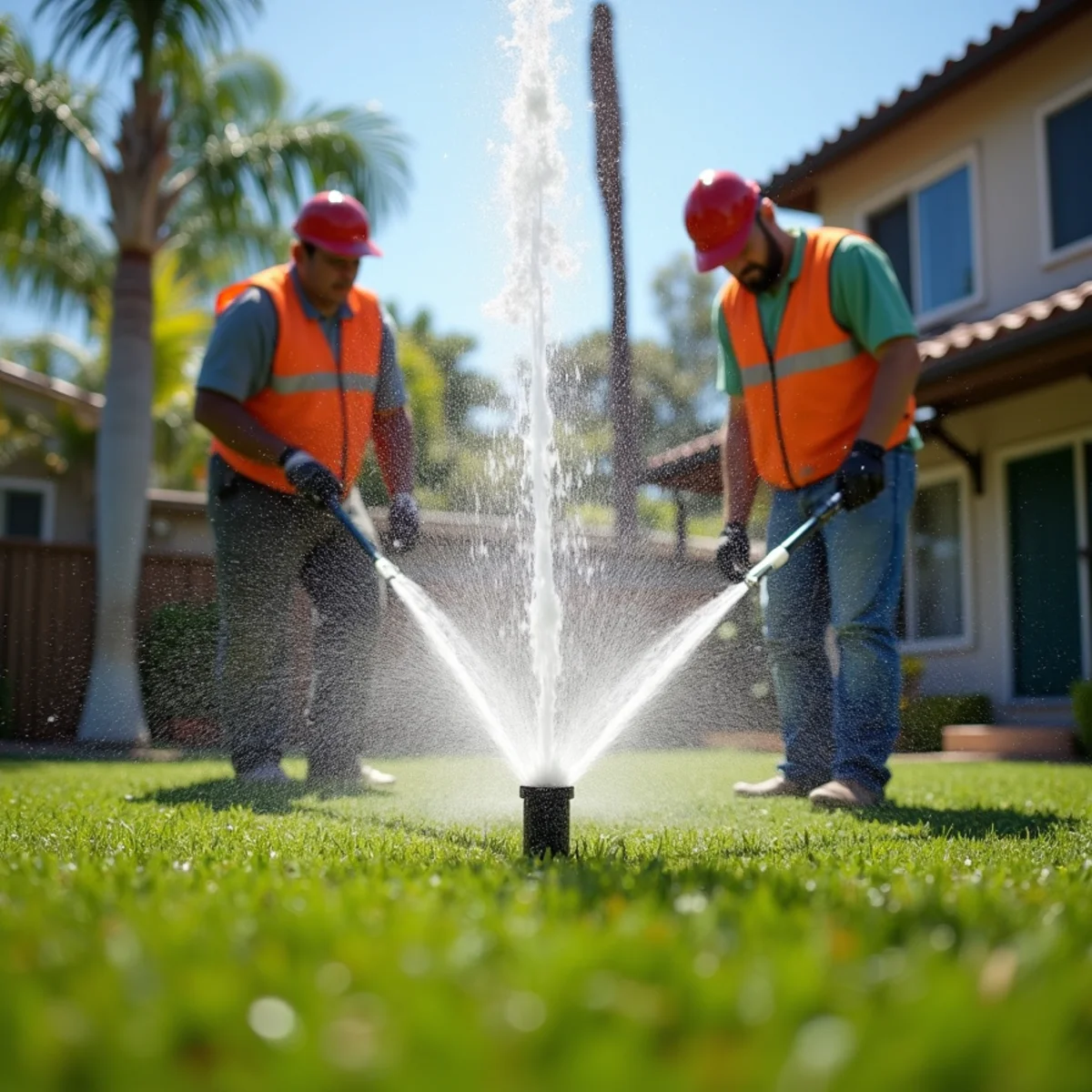
The third is tunnel vision on the trunk while ignoring the collateral damage — a cracked fence post, a gouged paver walkway, a bent gutter, a torn irrigation line hidden in the debris. We look for all of it, because a fast fence repair or irrigation fix is far cheaper caught now than discovered after the next rain.
- Don’t assume a leaning or hung-up tree is stable — it isn’t.
- Don’t start cutting before you photograph and video the scene.
- Don’t ignore power lines touching or near the tree — call 911 and the utility.
- Don’t overlook fence, hardscape, and irrigation damage buried in the debris.
- Don’t hire an unlicensed, uninsured crew for work over your home.
We respond across San Diego, El Cajon, and the surrounding communities the moment the wind drops something it shouldn’t.
Frequently Asked Questions
Should I call my insurance before or after removal?
How fast can you remove a tree off my house?
Is a leaning tree after a storm an emergency?
How much does emergency tree removal cost after a storm?
Will you work with my insurance company?
Need help with this in Southern California?
SOCAL EXTERIOR SERVICES, INC is a licensed San Diego landscaping and hardscaping contractor. Get a free, honest estimate from a local team that does the work right.