How to Inspect Mature Eucalyptus and Palm Trees for Structural Weakness and Rot
The trees most likely to fail in a San Diego windstorm give warning signs first. Here is what to look for on mature eucalyptus and palms before the wind does.
San Diego’s big wind casualties are predictable. Towering eucalyptus and over-tall palms fail in Santa Ana winds far more than other trees, and they usually show warning signs first. You do not need to be an arborist to spot the obvious red flags — here is what to look for, and when to call a professional.
Inspecting eucalyptus
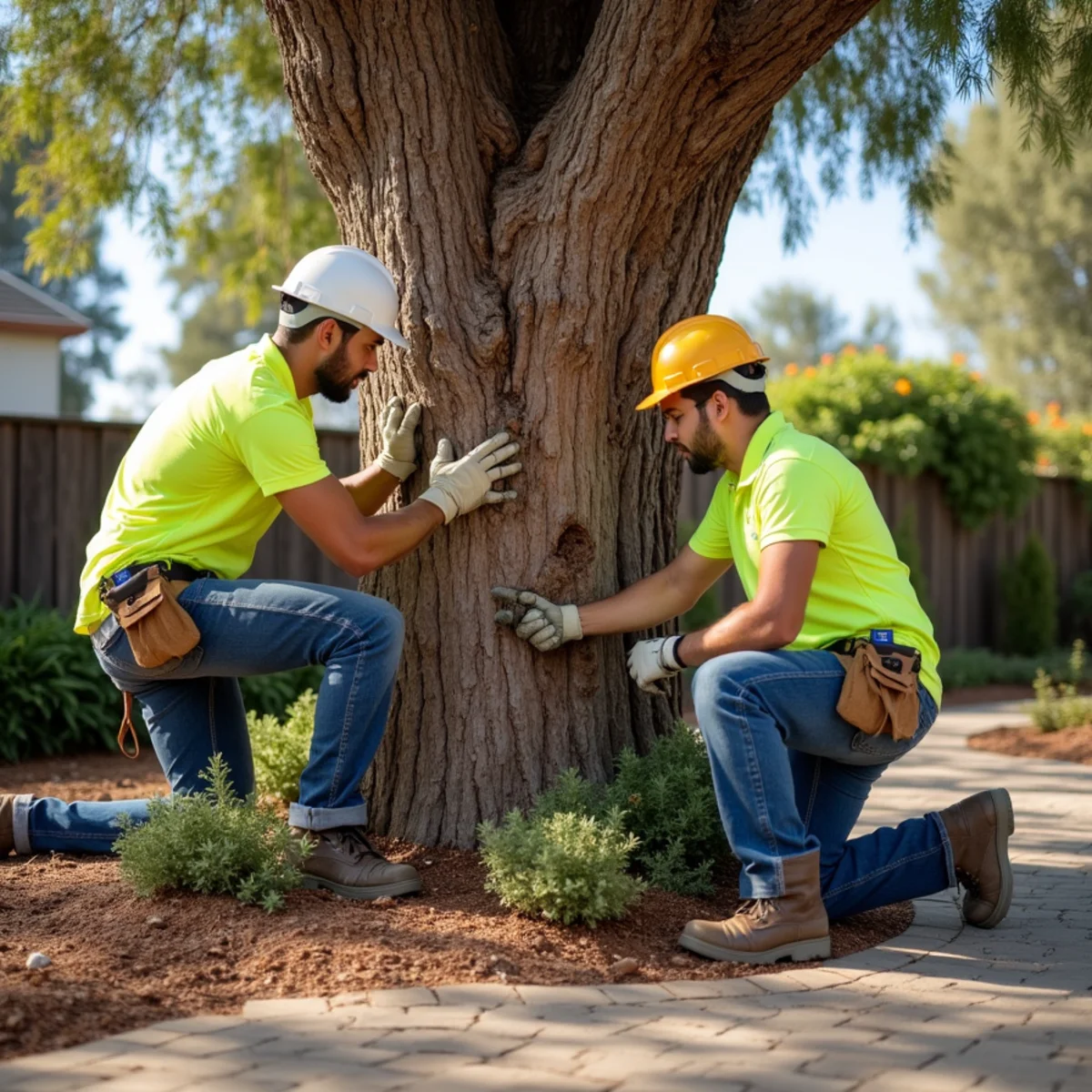
Eucalyptus grow fast, get huge, and are prone to dropping limbs — sometimes on calm days, but especially in wind. Walk around the tree and check for these:
- Dead or bare limbs, and large limbs with no leaves at the tips.
- Cracks or splits where big limbs join the trunk — a classic failure point.
- “Included bark,” where a tight V-shaped fork traps bark and creates a weak union.
- Mushrooms or conks at the base, a sign of internal rot.
- A noticeable lean that appeared recently, or heaving soil at the roots.
Inspecting palms
Palms rarely rot the way hardwoods do, but they fail in other ways — and their weight makes any failure serious.
- A soft, collapsing, or discolored crown (the growing point) — often fatal for the palm.
- A trunk that is soft, oozing, or cracked, especially near the base.
- A heavy skirt of dead fronds — a wind and fire hazard even on a healthy palm.
- A pronounced lean or lifted, exposed roots after a storm.
When to act
Any recent lean, root heaving, base fungus, or trunk crack warrants a professional look sooner rather than later — these are the trees that come down in the next windstorm. A hazardous tree is exactly what our emergency palm and tree removal team is equipped for, and proactive removal beats a middle-of-the-night storm cleanup.
Prevention through pruning and timing
Structural pruning, skirt removal, and thinning reduce wind load and catch problems early — best done before fall, as covered in fall fire safety and landscape prep. We inspect and maintain mature trees for homeowners in San Diego and Rancho San Diego.
Worried about a tree? Call (323) 606-0255 for an assessment before the wind decides for you.
When to call a professional — and what happens next
Some findings warrant a professional look sooner rather than later: a lean that appeared or worsened after a storm, soil heaving or lifting at the base, mushrooms or conks signaling internal rot, a soft or cracked trunk, or on a palm, a soft, discolored crown. These are the trees that come down in the next windstorm. Keeping people clear and having them assessed is far safer — and usually cheaper — than a middle-of-the-night emergency removal after failure.
Proactive care prevents most emergencies. Structural pruning reduces wind load, skirt removal eliminates fire and debris hazards, and thinning lets wind pass through a canopy instead of pushing it over. Best done before fall, this ties directly into fall fire safety and landscape prep, and when a tree does fail, our storm cleanup crews handle the aftermath — tree, fence, and debris.
A palm or eucalyptus that has to come out doesn’t have to leave a hole; we can grind the stump and re-landscape the spot.
Red flags that warrant a professional assessment
- A new or worsening lean, or lifted, exposed roots.
- Cracks or splits where large limbs meet the trunk.
- Mushrooms or conks at the base (internal rot).
- A soft, oozing, or cracked trunk.
- On palms: a soft, collapsing, or discolored crown.
A simple seasonal inspection routine
You do not need to be an arborist to catch the obvious problems early — you need a routine. Twice a year, and again after any big storm, do a slow lap around each mature tree and look at three things: the base, the trunk, and the canopy. At the base, watch for heaving or lifted soil and any mushrooms or conks. On the trunk, look for new cracks, soft or oozing spots, and — on palms — a soft or discolored crown. In the canopy, note dead limbs, especially large ones over the house or driveway.
Anything new or worsening — a fresh lean, a split at a limb union, root heaving — is your cue to bring in a professional before the next windstorm decides for you. A hazardous tree is exactly what our emergency removal team is equipped for, and proactive pruning beats a middle-of-the-night storm cleanup.
- Base: heaving or lifted soil, mushrooms, or conks.
- Trunk: new cracks, soft or oozing spots; on palms, a soft crown.
- Canopy: dead limbs, especially large ones over structures.
- After storms: re-check for new leans and cracks.
- Act on anything new or worsening before the next wind event.
We inspect and maintain mature trees across San Diego and Rancho San Diego.
Frequently Asked Questions
What are the warning signs a tree might fall?
Why do eucalyptus drop limbs?
Should I remove a leaning tree proactively?
How often should mature trees be inspected in San Diego?
Is it cheaper to remove a risky tree before it falls?
Need help with this in Southern California?
SOCAL EXTERIOR SERVICES, INC is a licensed San Diego landscaping and hardscaping contractor. Get a free, honest estimate from a local team that does the work right.