Fall Fire Safety & Landscape Prep: Thinning Dense Chaparral and Removing Palm Skirts
San Diego’s most dangerous fire weather comes in fall with the Santa Ana winds. Here is the landscape prep that lowers your risk before the winds arrive.
Counterintuitively, San Diego’s worst fire danger arrives in fall, not summer. That is when the Santa Ana winds blow hot and dry off the desert, turning a season of dried-out vegetation into fuel and pushing any spark fast. The landscape work that protects your home needs to be done before those winds arrive.
Thin dense chaparral and dried growth
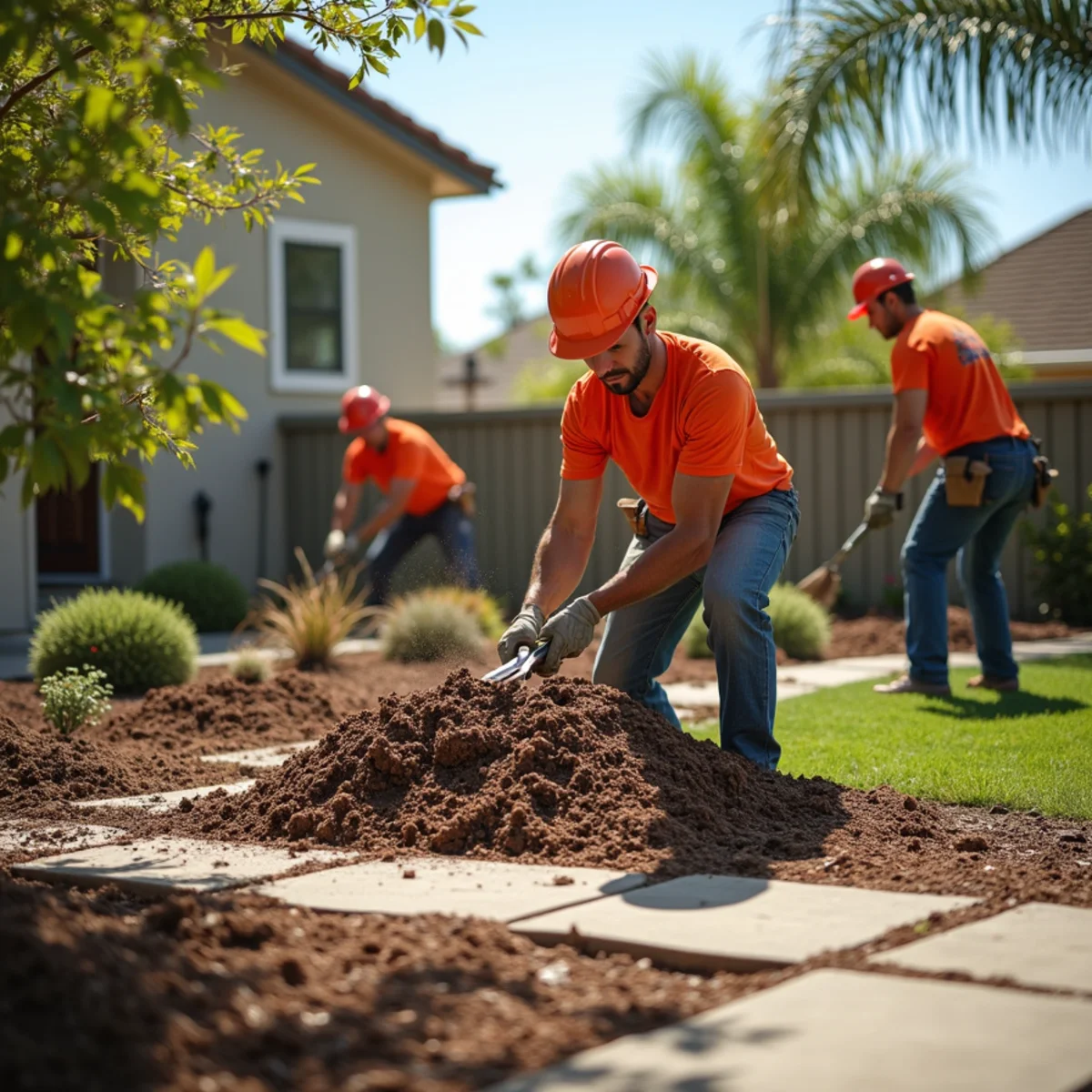
A summer of heat leaves chaparral and ornamental growth tinder-dry by fall. Thinning it — creating spacing between plants and removing dead material — breaks up the continuous fuel that lets fire race across a property. This is the fuel-reduction core of defensible space, and our urgent yard debris and hazard removal crews handle the clearing and haul-off.
Remove palm skirts and dead fronds
The dead frond “skirts” on tall palms are one of the most dangerous fuels in a San Diego yard — they ignite easily, carry fire upward, and throw burning embers in wind. Removing skirts and dead fronds before fall is a high-impact, often-overlooked task. When a palm is a genuine hazard, our emergency palm and tree removal team can take it down.
Clear ladder fuels and the home zone
- Cut low tree limbs that let fire climb from the ground into canopies.
- Clear leaves and needles from roofs, gutters, and under decks.
- Pull dead vegetation and woodpiles well away from the structure.
- Keep the first 30 feet around the home lean, clean, and irrigated.
Inspect trees for wind failure too
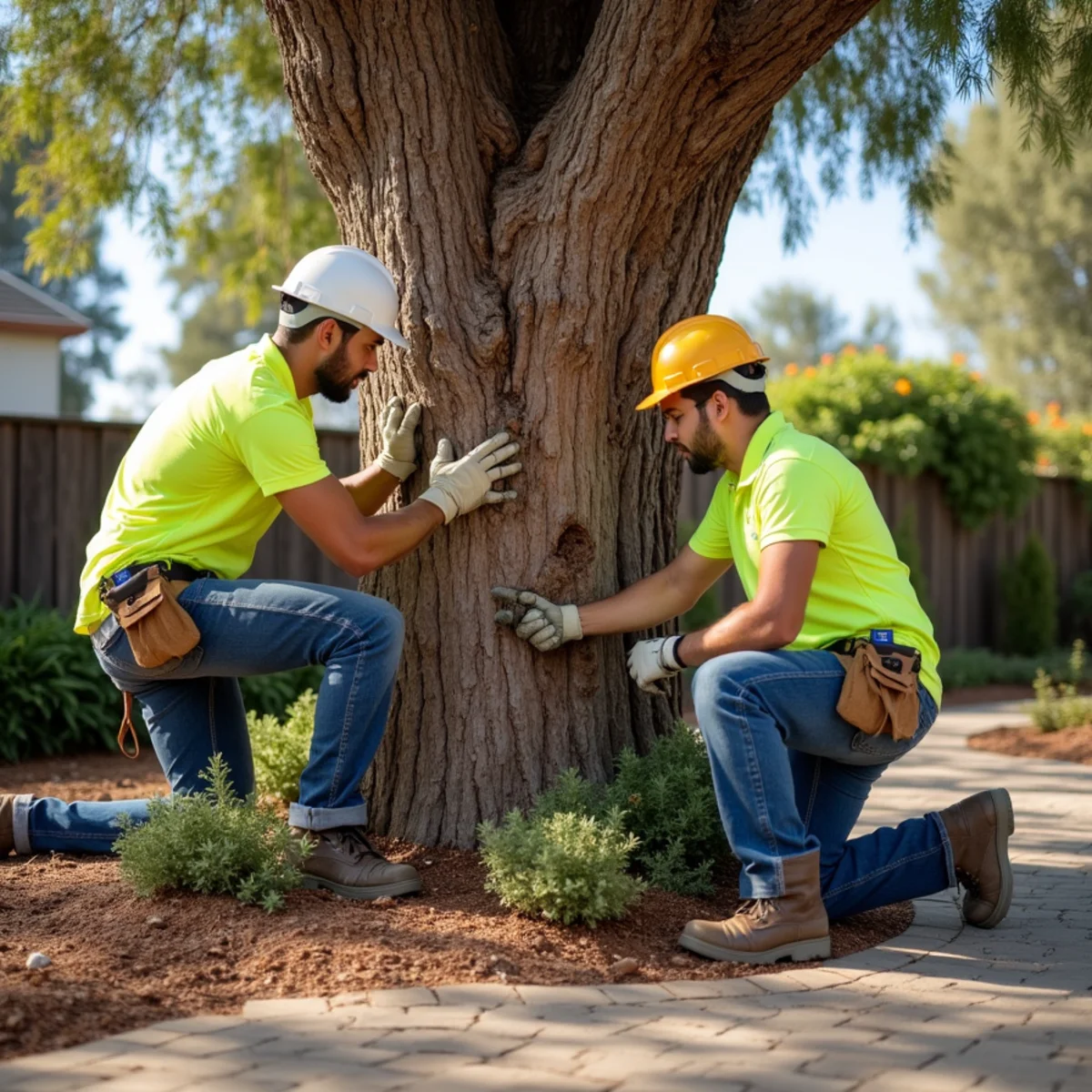
Fall winds do not just spread fire — they drop weak trees and limbs. Inspecting and pruning risky trees now serves double duty, which is why we pair fire prep with the checks in how to inspect mature eucalyptus and palm trees.
We prep interface properties in Poway and Fallbrook every fall. Get ahead of the Santa Anas — call (323) 606-0255.
Why fall — not summer — is San Diego’s dangerous season
It surprises people, but the county’s worst fire weather arrives in fall. That is when the Santa Ana winds blow hot and dry off the desert, after a full summer has cured every plant and hillside into fuel. A spark that would fizzle in June races in October. The landscape work that protects your home therefore has to be finished before those winds arrive — reactive clearing during a red-flag warning is too late.
Two tasks carry most of the risk reduction. Thinning dense, dried chaparral breaks up the continuous fuel that lets fire travel, and removing the dead frond skirts on tall palms eliminates one of the most dangerous, ember-throwing fuels in a San Diego yard. Both are our urgent yard debris and hazard removal crews’ work, and a genuinely hazardous palm becomes an emergency removal.
Fall winds also drop weak trees, so pairing fire prep with a tree inspection does double duty — see how to inspect mature eucalyptus and palm trees.
Fall fire-prep priorities
- Thin dense chaparral and dried ornamental growth to create spacing.
- Remove palm skirts and dead fronds before the winds.
- Cut low “ladder fuel” limbs that let fire climb into canopies.
- Clear leaves and needles from roofs, gutters, and under decks.
- Keep the first 30 feet around the home lean, clean, and irrigated.
A pre-Santa-Ana yard walkthrough
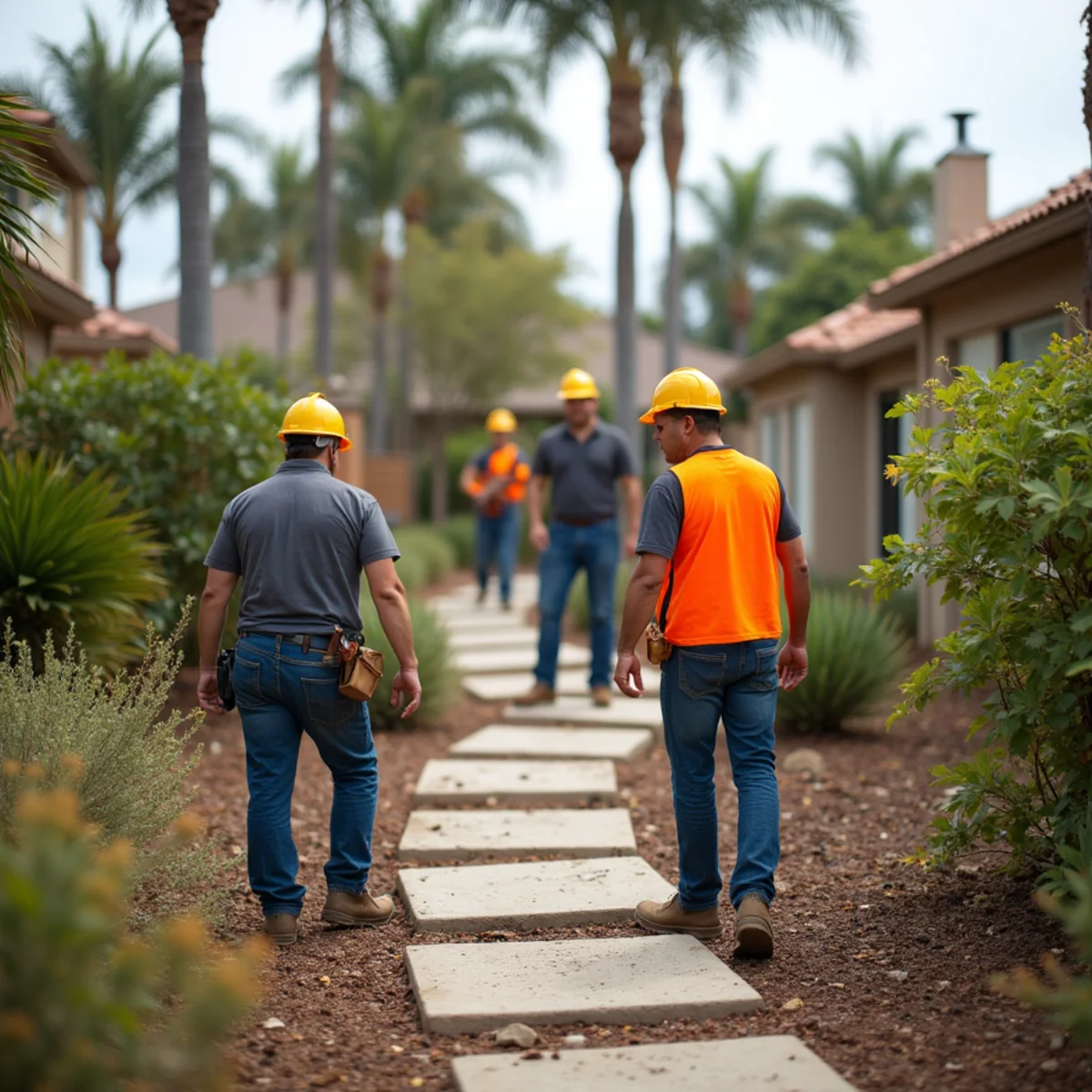
A twenty-minute walk around the property before the winds arrive catches most of what turns into a fall emergency. Start at the roofline and work down: look for limbs overhanging the house, the driveway, and play areas; note any tree that leaned, cracked, or dropped a limb recently; and check palms for heavy dead-frond skirts. Then scan the ground for anything the wind can throw — loose furniture, umbrellas, unsecured debris — and confirm gutters and roof valleys are clear of the needles and leaves that carry embers.
Flag the items that need a pro — a hazardous tree for removal, brush for clearing — and schedule them before the warning, not during it. The tree-specific signs are in how to inspect mature eucalyptus and palms.
- Limbs overhanging the house, driveway, and play areas.
- Trees that recently leaned, cracked, or dropped a limb.
- Heavy dead-frond skirts on tall palms.
- Loose furniture and debris the wind can throw.
- Gutters and roof valleys clear of ember-carrying needles and leaves.
We prep interface properties across Poway and Fallbrook.
Frequently Asked Questions
Why is fall the most dangerous fire season in San Diego?
Why remove palm skirts?
Can you clear brush before an inspection?
How often should defensible space be maintained?
Can removing palm skirts really reduce fire risk?
What is the difference between fuel reduction and clear-cutting?
Need help with this in Southern California?
SOCAL EXTERIOR SERVICES, INC is a licensed San Diego landscaping and hardscaping contractor. Get a free, honest estimate from a local team that does the work right.