
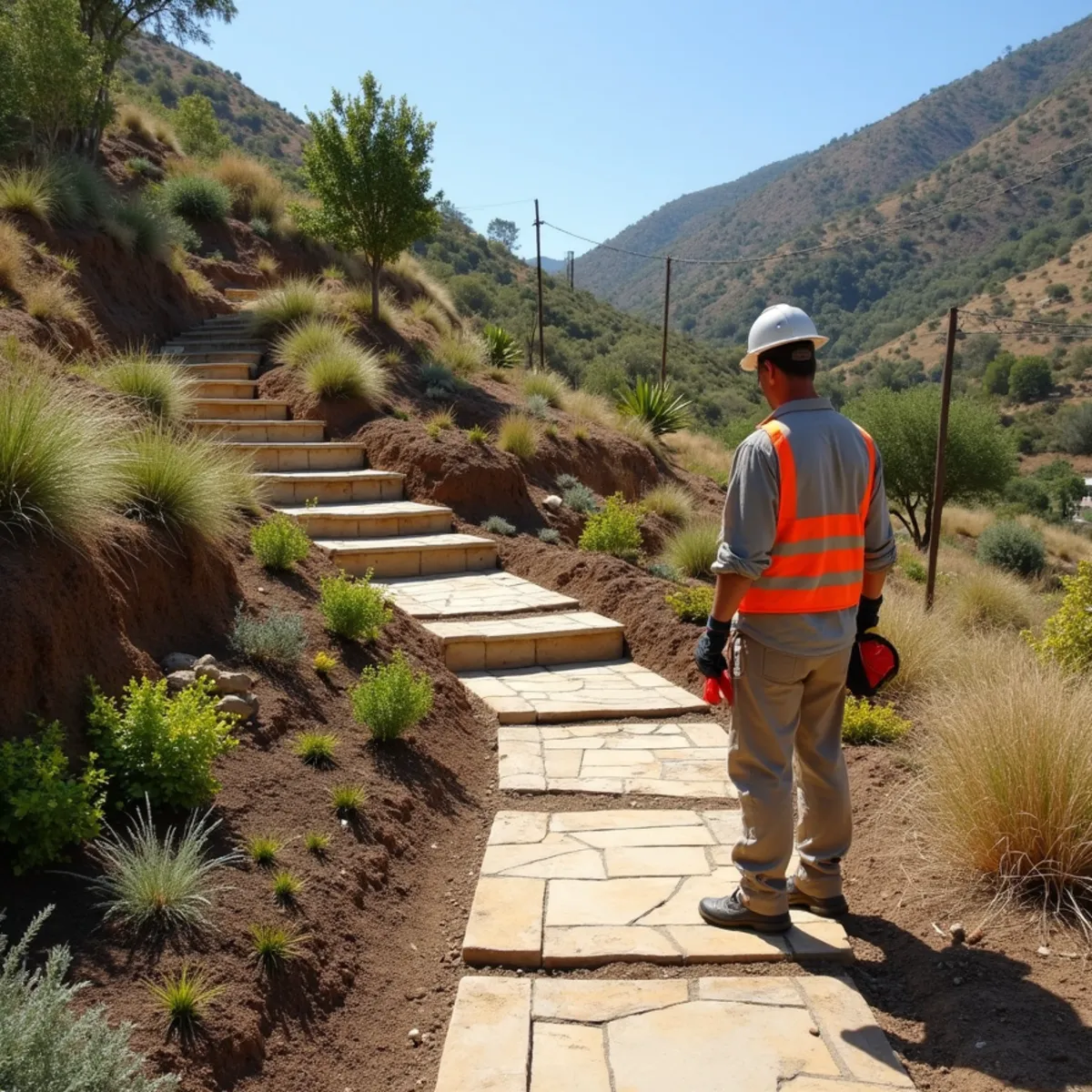
SoCal Exterior Services designs and builds slope stabilization and terracing across the county’s canyons and hillsides. We turn a slope that is quietly failing into one that is stable, planted, and — often — usable terraced space you actually gain from.
How we control slope erosion
- Terracing with retaining walls to break long slopes into stable steps
- Slope drainage — swales, drains, and channels that steer water safely
- Geo-mesh, jute netting, and erosion-control blankets on bare soil
- Deep-rooting native and drought-tolerant slope planting
- Boulder placement and rock work for rugged, stable faces
Water management is the foundation
Erosion is water doing what water does on unprotected soil. The most durable fixes start by controlling where water goes — intercepting it at the top of a slope, carrying it across in stable channels, and getting it off the face without letting it concentrate and cut. Terracing then breaks a long, fast slope into a series of short, slow ones, dramatically reducing the energy water has to move soil.
Planting that holds soil for the long term
Structure and drainage buy time; roots make it permanent. We plant slopes with deep-rooting natives and drought-tolerant species that knit the soil together, tolerate our dry summers, and shrug off the storms that started the problem. Established slope planting is the difference between a fix that lasts one season and one that lasts for good.
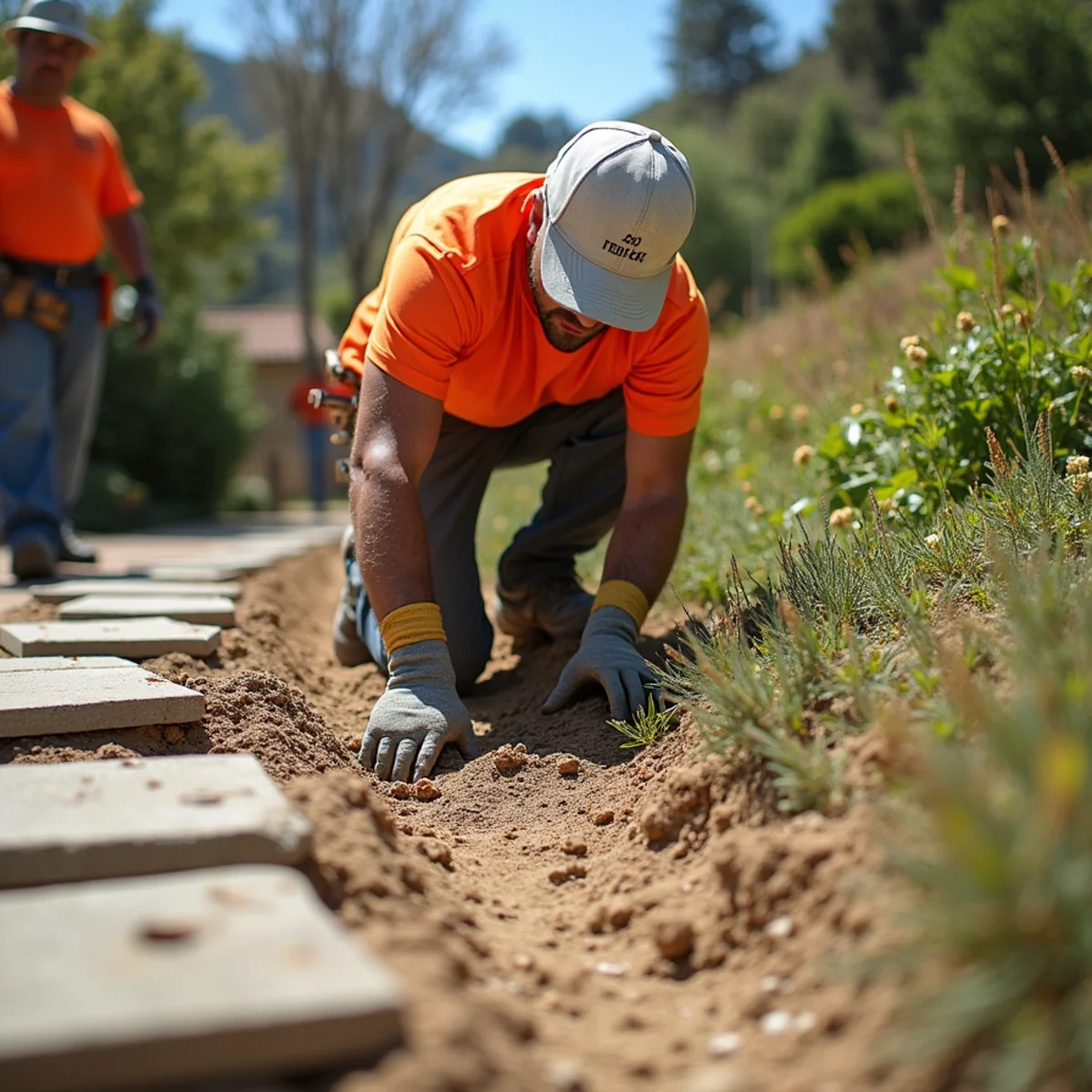
What’s Included in Our Slope Erosion Control Service
Every slope erosion control project we take on is a complete scope, not a partial fix. Here’s what a typical job includes:
- Slope, soil, and water-flow assessment to find why it is eroding
- Drainage design to intercept and carry water safely off the slope
- Terracing with retaining walls to break long slopes into stable steps
- Geo-mesh, jute netting, and erosion-control blankets on bare soil
- Deep-rooting native and drought-tolerant slope planting
- Boulder placement and rock work for rugged, stable faces
Our Process
- 1Slope assessmentWe read the slope, soil, and water flow to understand why it is eroding and where.
- 2Drainage designWe plan how to intercept and carry water safely off the slope before it can cut.
- 3Terracing & structureRetaining walls, terraces, or boulders break the slope into stable, manageable steps.
- 4Erosion control & plantingNetting or blankets hold bare soil while deep-rooting plants establish.
- 5Establishment careWe tend the planting through establishment so the slope is genuinely stabilized.
What Affects the Cost
We don’t publish flat prices, because an honest number depends on your specific property. Here’s what shapes the estimate — and what we’ll walk through with you on site, free of charge:
- Slope steepness, height, and access for crews and equipment
- Amount of terracing and retaining structure required
- Drainage complexity — how much water must be intercepted and routed
- Erosion-control materials and the density of slope planting
- Whether emergency repair of an active failure is needed first
Why San Diego Chooses SoCal Exterior Services for Slope Erosion Control
Water management is the foundation
Erosion is water on unprotected soil. We control where water goes first — intercepting it at the top and carrying it off the face — then terrace and plant.
Structure plus roots
Terracing and geotextiles buy stability now; deep-rooting natives make it permanent. We do both, so the slope holds through future storms.
Emergency and permanent
As a licensed C-27 and B contractor we handle active mudslide and erosion clearing, then design the terracing, drainage, and planting that prevent the next failure.
Timed for our seasons
We get drainage, structure, and planting in before the rainy season, so canyon and hillside lots are ready for winter — insured and guaranteed.
The Layered System That Holds a San Diego Slope
Erosion is water moving over unprotected soil, so a slope that holds is really a system of layers working together — no single product does it alone. The foundation is water management: we intercept flow at the top of the slope with a swale or brow ditch, carry it across in stable channels, and get it off the face through proper outlets so it never concentrates and cuts. Downspouts and hardscape that dump onto a slope are a common, overlooked cause of failure, and we route them away.
Terracing is the next layer. Breaking a long, steep slope into a series of short, gentle steps — often with retaining walls — dramatically reduces the energy water has to move soil, and frequently creates usable planting space you gain from. On bare or newly planted faces, geo-mesh, jute netting, and erosion-control blankets hold the surface soil through the first rains.
Roots make it permanent. We plant slopes with deep-rooting California natives and drought-tolerant groundcovers that knit the soil, tolerate our dry summers, and shrug off the storms that started the problem. The work is best installed in the dry season, before winter — the timeline we lay out in protecting coastal canyon slopes during winter rains — and when a slope has already failed, we handle the emergency clearing first.
- Water management — intercept, channel, and outlet the flow
- Terracing and retaining to break long, fast slopes into steps
- Geo-mesh and blankets to hold bare soil through the first rains
- Deep-rooting native planting for permanent stabilization
- Installed in the dry season, before winter storms
Serving San Diego County
We provide slope erosion control across San Diego and all of San Diego County, including El Cajon, Chula Vista, National City, La Mesa, Santee. Not sure if you’re in our area? Call (323) 606-0255 and we’ll let you know.