Navigating San Diego Soil Types: From Coastal Sandy Loam to Dense Inland Adobe Clay
The soil under your yard quietly dictates your plants, your drainage, and whether your hardscape lasts. Here is San Diego’s soil map and what to do about it.
Two San Diego yards ten miles apart can sit on completely different soil, and that soil quietly decides which plants thrive, how water behaves, and whether your patio stays flat. Before design comes an honest read of the ground — here is what we find across the county.
Coastal sandy loam
Near the coast — Point Loma, the beach communities, parts of Encinitas — soils tend toward sandy loam. They drain fast and are easy to dig, but they hold little water and fewer nutrients, so plants dry out quickly and feeding matters. Drip irrigation shines here because it delivers water slowly enough to soak in.
Dense inland adobe clay
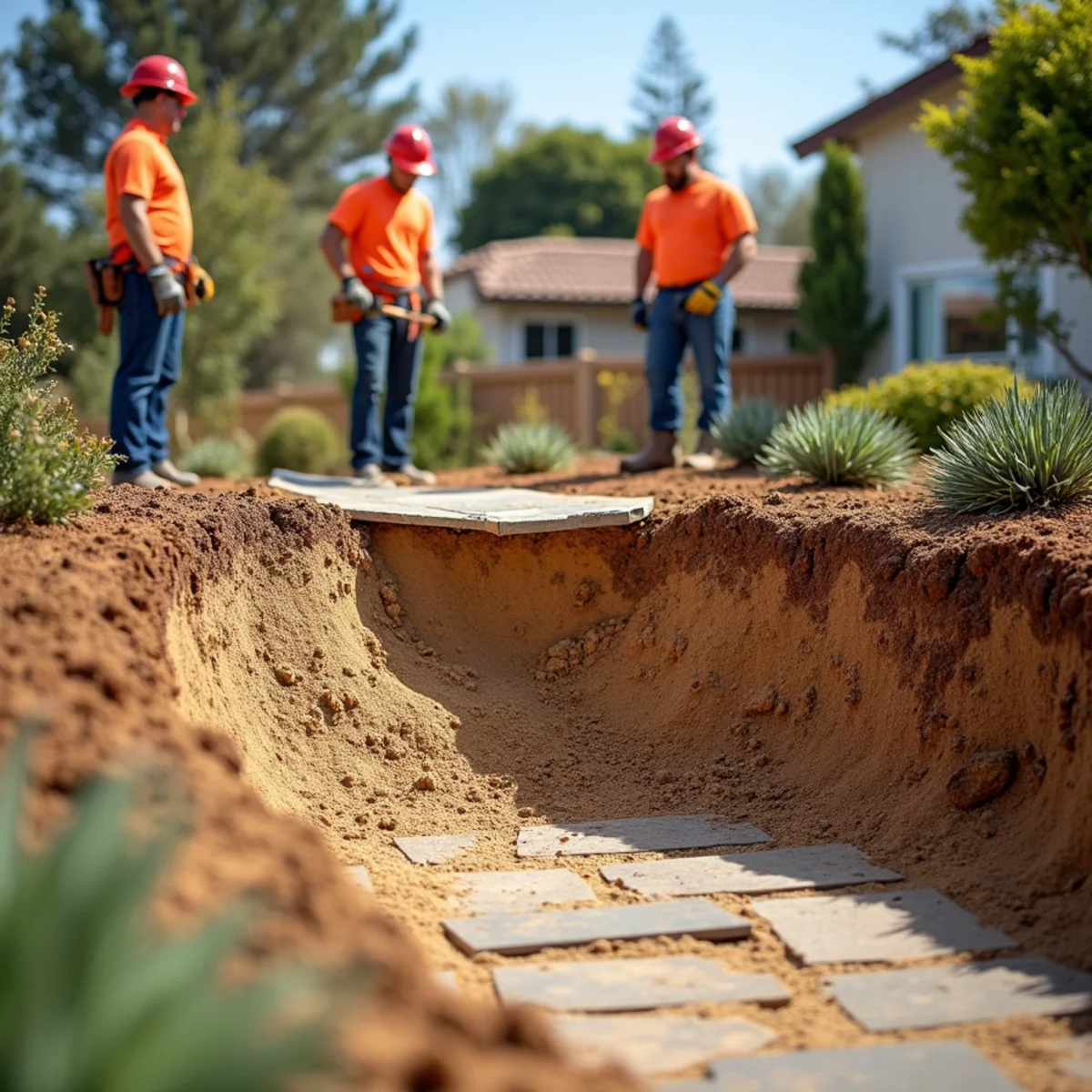
Inland — much of the East County valleys, El Cajon, and the mesas — the soil turns to expansive adobe clay. It holds water and nutrients well but drains poorly, compacts hard, and swells and shrinks with moisture. That movement is exactly what cracks concrete and sinks poorly based pavers, which is why our paver work is built for it — see why paver driveways sink.
Decomposed granite and rocky hillside soils
In the foothills and hillside communities like Escondido and Mt. Helix, you hit decomposed granite and rock. It drains well and is stable to build on, but excavation is heavy work and planting pockets often need amendment. It is ideal ground for terracing and boulder features.
How soil changes your choices
- Sandy soil: amend for water retention, feed regularly, water with drip, choose plants that tolerate fast drainage.
- Clay soil: improve drainage and structure, avoid overwatering, build hardscape on deep compacted bases, choose clay-tolerant plants.
- Rocky/DG soil: amend planting pockets, lean into terracing and rock features, expect heavier excavation.
Why we test before we design
Getting the soil right up front prevents the expensive failures — drowned plants in clay, starved plants in sand, sunken hardscape everywhere. It also guides which drought-tolerant plants will actually thrive. We read the soil on every estimate across the county. Call (323) 606-0255 to start with the ground truth.
How we read and amend your soil before designing
Before a single plant or paver is specified, we read the ground. A simple jar or percolation test tells us how fast water moves, and a look at structure and depth tells us what the soil can support. That read drives everything: which plants will thrive, how the irrigation should run, how deep a hardscape base needs to be, and whether drainage has to be solved first. Designing before reading the soil is how yards end up with drowned plants in clay and starved plants in sand.
Amendment is soil-specific. Sandy coastal soil needs organic matter and consistent drip irrigation to hold water and nutrients; dense clay needs improved drainage and structure so roots don’t suffocate and hardscape doesn’t heave. On rocky decomposed-granite hillsides we amend planting pockets and lean into terracing and boulder features.
Soil is also why our paver work and drought-tolerant designs are built the way they are — matched to the ground rather than dropped on top of it.
Soil type → what changes
- Coastal sandy loam: amend for retention, feed regularly, water with drip, pick fast-drainage plants.
- Inland adobe clay: improve drainage, avoid overwatering, build deeper compacted hardscape bases.
- Decomposed granite / rocky: amend planting pockets, use terracing and rock features, expect heavy excavation.
- Every type: match the plant palette and irrigation to the soil, not the other way around.
- When in doubt, test — it prevents the expensive failures.
Plant and hardscape choices by soil type
Once you know your soil, the design choices follow logically. Fast-draining coastal sandy loam favors plants that resent wet feet — many Mediterranean and succulent species thrive — but it needs organic amendment and consistent drip to hold water and nutrients. Dense inland clay is the opposite: it holds water well, so it suits clay-tolerant plants but demands improved drainage and, for hardscape, a deeper compacted base so nothing heaves. Rocky decomposed-granite hillsides drain freely and build solidly, making them ideal for terracing, boulder features, and drought planting in amended pockets.
Matching the drought-tolerant palette and paver base to the soil — instead of fighting it — is what separates a landscape that thrives from one that struggles. That is why we read the ground on every estimate.
- Sandy coastal soil: amend for retention, water with drip, pick fast-drainage plants.
- Clay soil: improve drainage, choose clay-tolerant plants, build deeper hardscape bases.
- Decomposed granite / rocky: terrace, add boulder features, amend planting pockets.
- All soils: match plants and irrigation to the soil, not the reverse.
- When unsure, a simple percolation test settles it.
We assess soil on every estimate across San Diego County and Escondido.
Frequently Asked Questions
What kind of soil does San Diego have?
Why does clay soil crack my concrete?
Can you tell my soil type at the estimate?
How can I tell what soil type I have?
Can you improve bad soil, or do I have to work around it?
Need help with this in Southern California?
SOCAL EXTERIOR SERVICES, INC is a licensed San Diego landscaping and hardscaping contractor. Get a free, honest estimate from a local team that does the work right.